

In this article, I’m sharing a recap of my One Week Vibe Coding experience, following up on my first article of this series. I’ll walk through what I built — what the Onchain Builder Network is, the 7-day building journey, my lessons and reflections, and what’s next (since the One Week Vibe Coding series is still ongoing 😊).
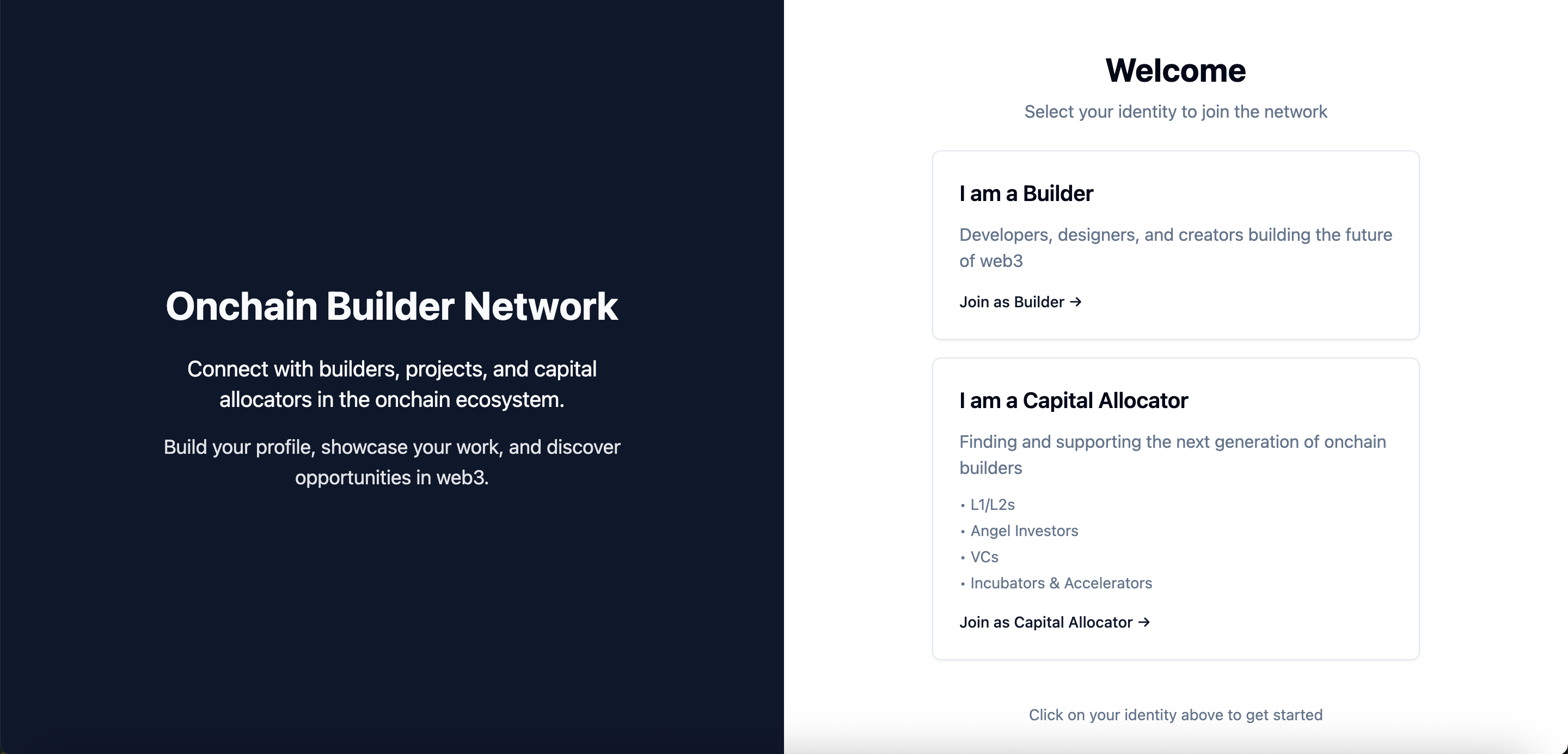
What I have built
So, what exactly is the Onchain Builder Network?
If I had to put it in a single sentence, it’s:“A global, reward-incentivized builder network—community-sourced via Join/Refer—with AI-powered discovery so L1/L2s, VCs, and accelerators can quickly find the right early builders.”
It’s designed for L1/L2 teams, angel investors, VCs, incubators, accelerators, and founders who are looking for support.
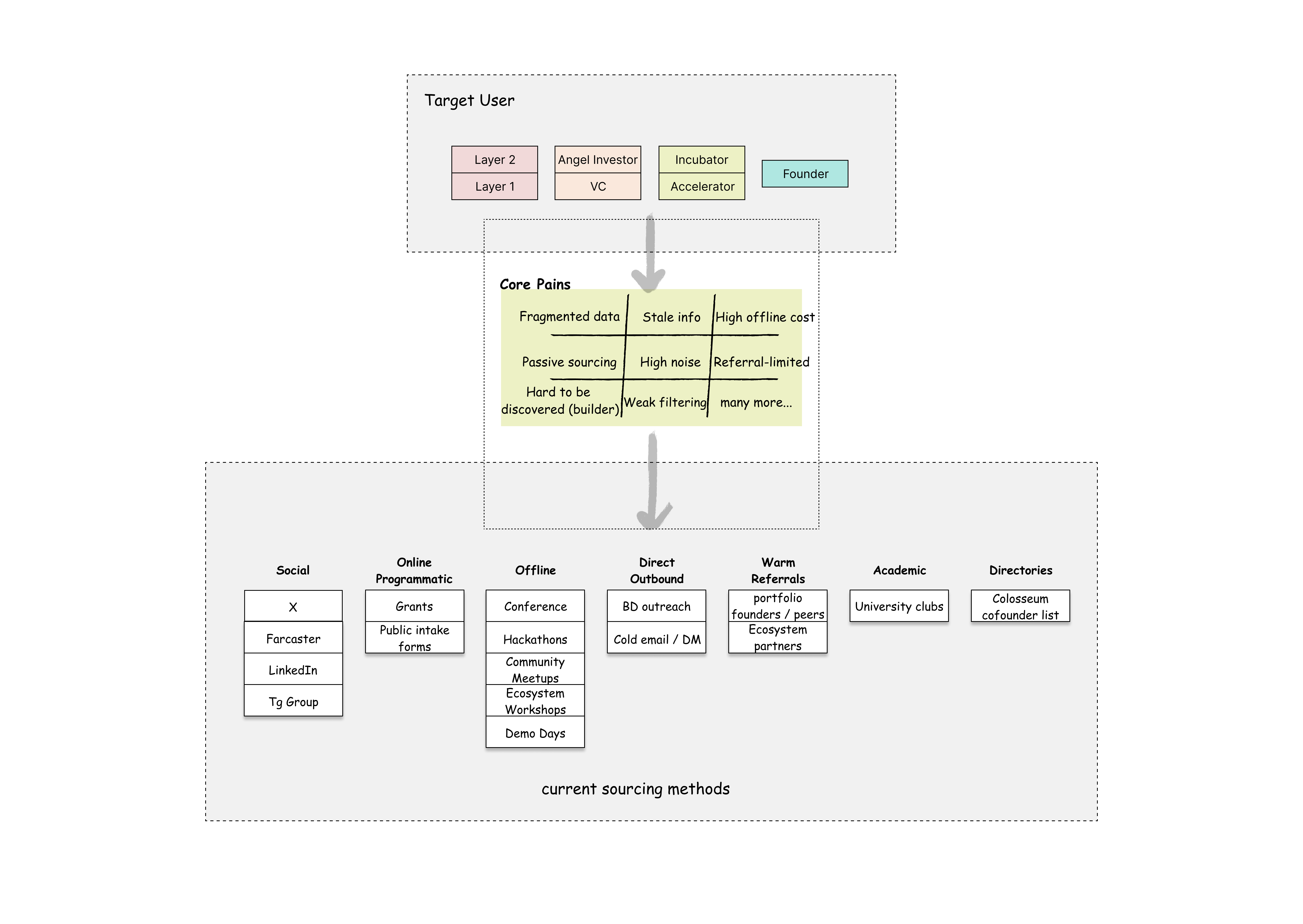
I’ve been asking myself these questions: Why not use Twitter, LinkedIn, or other existing platforms? What options already exist, and what challenges do builders or VCs face when using them? Ultimately, what is the real pain point? I clarified my thoughts while drawing the illustration below. 👇
Imagine you’re a VC starting your morning sourcing routine. Instead of scrolling endlessly on Twitter or sifting through cold emails, you open the Onchain Builder Network. You tell your AI agent to set a hard bar — for example, founders with two successful exits who are now building in payments and based in Vancouver — or you apply filters such as city, stage, track, or chain manually. Instantly, the AI generates a ranked shortlist tailored to your preferences, complete with explainable scores showing why each founder is a fit. With one click, you can reach out directly. As you provide feedback, the system learns and fine-tunes your preferences. The result? More qualified leads each day, a higher reply-to-meeting rate, and hours of due diligence time saved.
The 7-Day building journey
The 7-day building journey unfolded pretty much as I had planned in the last article. Day 1 was about defining the needs. On Days 2 and 3, I focused on designing the full workflow and features. Days 4 to 6 were spent on rapid development using Lovable, and the final day was dedicated to testing the MVP.
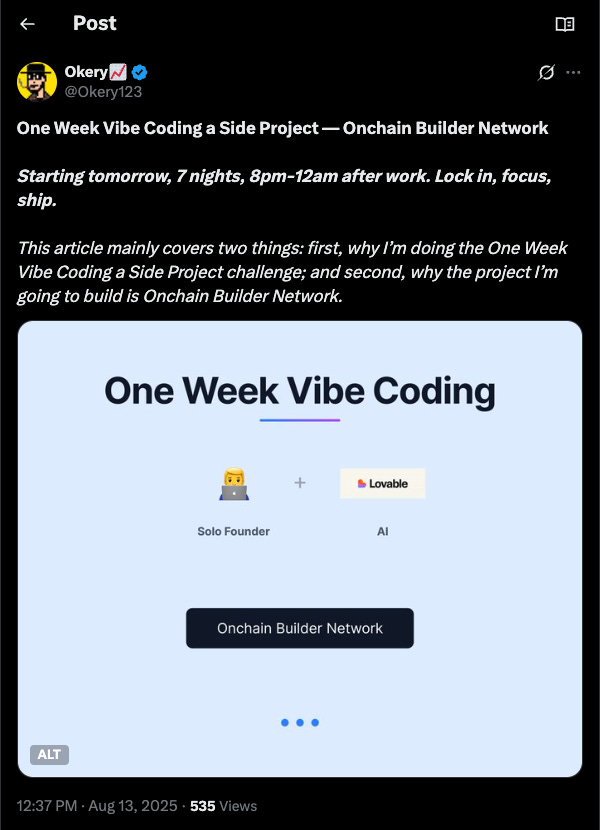
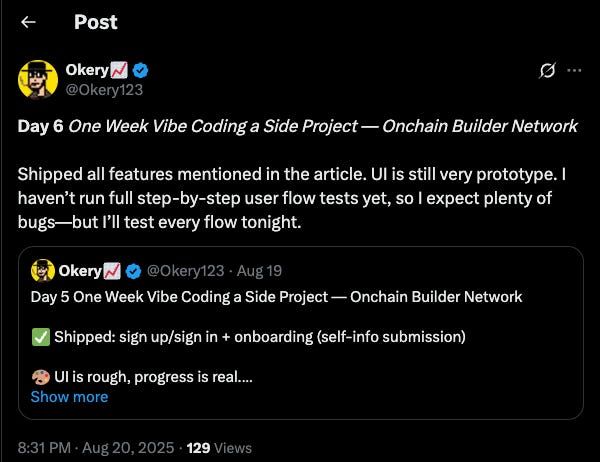
Throughout the week, I posted daily updates on X to share my progress. Here’s the post from Day 1, and another from Day 6 when I wrapped up the basic feature development.
Learnings & Reflections
During this 7-day vibe-coding sprint, I learned three practical things.
First, Lovable’s auto-generated UI often diverged from my hand-drawn wireframes and what I had in mind; next time I’ll import Figma designs instead of uploading sketches.
Second, detailed prompts are everything—without a fully specified brief for Lovable, I burned a lot of time on rework. In the future, I’ll use a structured prompt template (see the template below) and have ChatGPT generate the brief.
Third, I had ChatGPT create a QA test prompt for Lovable; otherwise, step-by-step manual testing wastes time and credits—even though running the tests in the command line showed a lot of errors. 😂
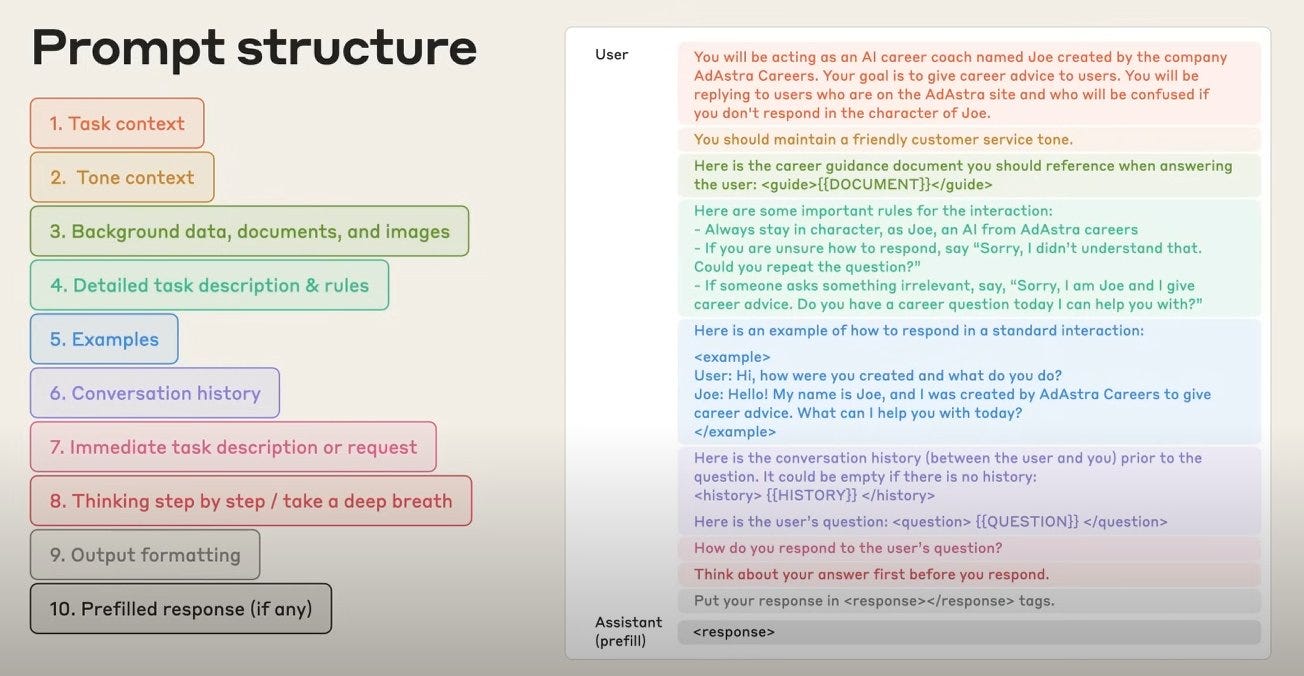
Even though the process didn’t follow my original plan exactly, AI still boosted my productivity in a big way. With Lovable, I was able to generate a simple MVP that clearly demonstrated my idea — and that was enough. As I kept learning how to use Lovable more effectively to produce an MVP I was happy with, it hit me: in the future, the most important skill for engineers won’t be writing code, but mastering AI tools.
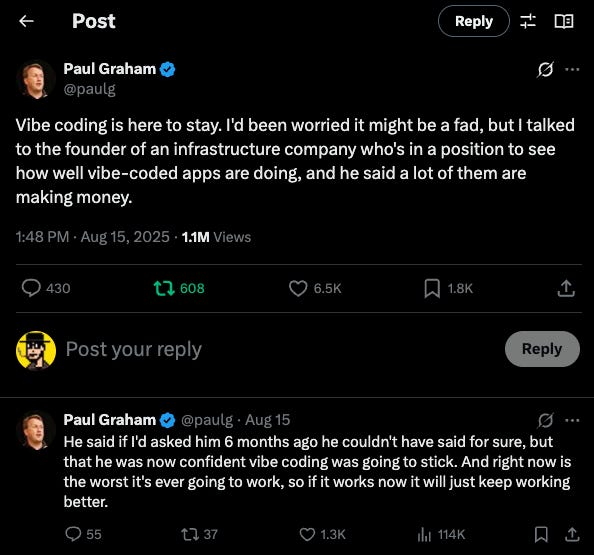
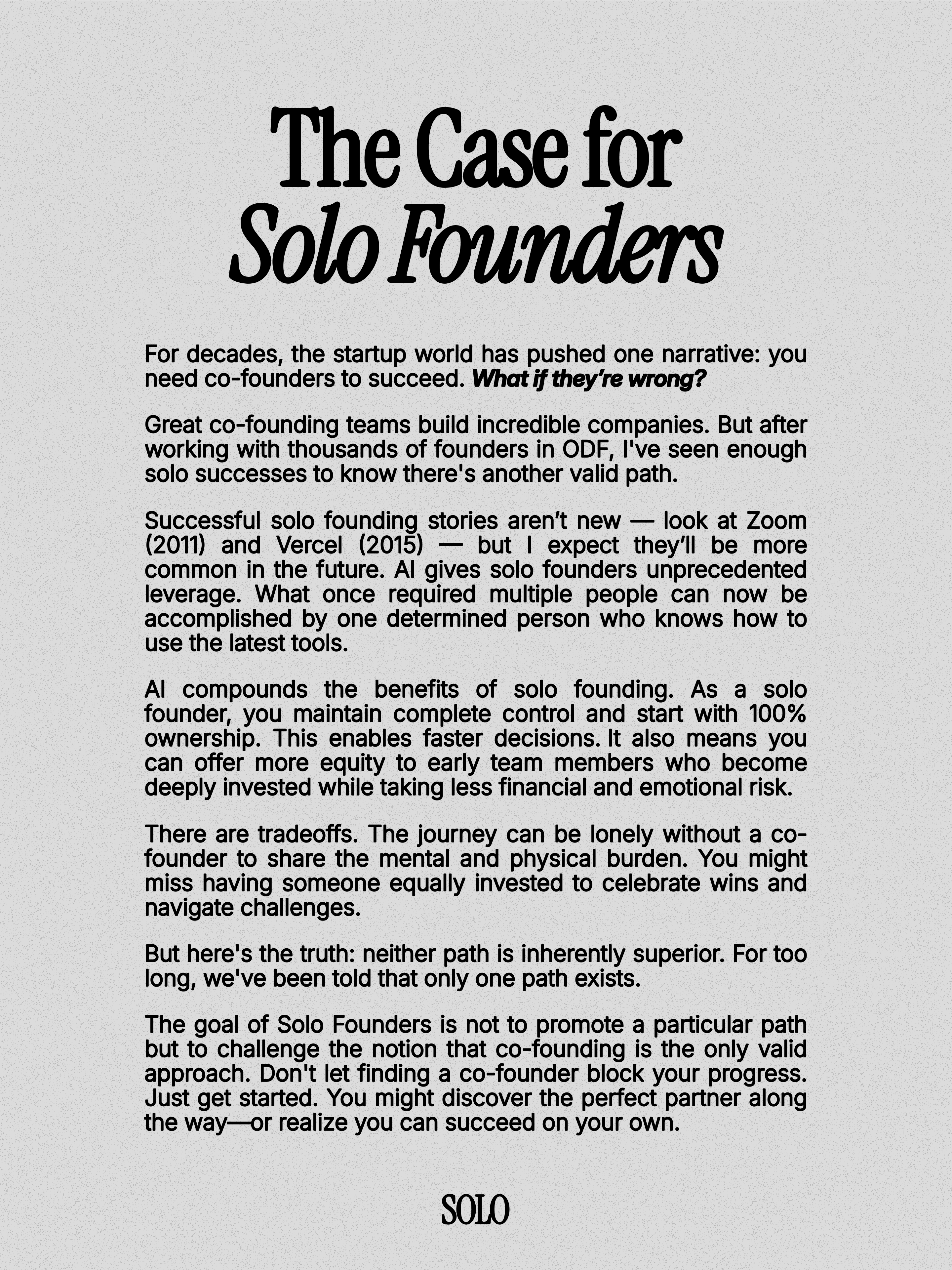
At the same time, the solo founder + AI model places much higher demands on a founder’s overall skill set. You have to handle many things on your own — design, product, user acquisition — and most importantly, master and make full use of the latest AI tools. Still, I believe we’ll see more and more solo founders, empowered by this model, go on to build great companies and products.
Let’s circle back to the Onchain Builder Network. It all started with a sudden idea 💡that hit me while riding the Canada Line SkyTrain toward Waterfront. Of course, I know it wasn’t purely random — it came from years of accumulated experience as a builder, an incubator, a VC, and helping scale L1/L2 ecosystems.
I believe this network can be especially valuable for founders who have great ideas but lack resources and connections. Instead of wasting energy chasing funding or searching for the right people to help, they simply fill out their information and that’s it, let the network do the rest. This way, they can stay focused on building their product — while capital allocators and infrastructure partners come to them.
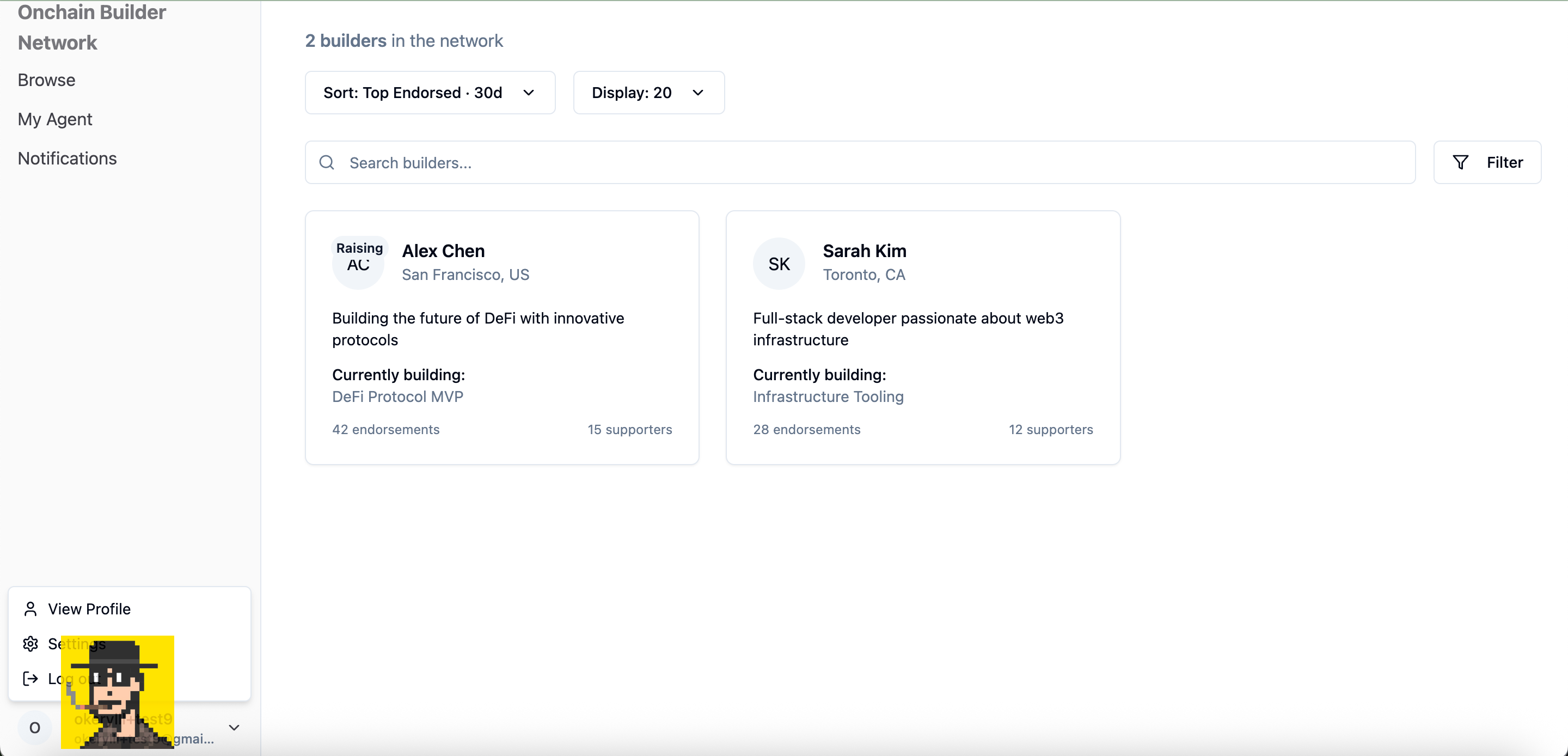
The Onchain Builder Network is essentially a builder marketplace. It’s like an AutoTrader designed for VCs: you’re not browsing cars, you’re browsing the right builders you want to back and build alongside.
What’s Next
My next step is to refine the MVP and make it truly usable. I plan to create a demo and write a simple user guide, then run some internal testing with close friends first. The One Week Vibe Coding series is still ongoing — and I’m excited to share what comes next. 🚀