

This article mainly covers two things: first, why I’m doing the One Week Vibe Coding a Side Project challenge; and second, why the project I’m going to build is Onchain Builder Network.
Why I Decided to Do This
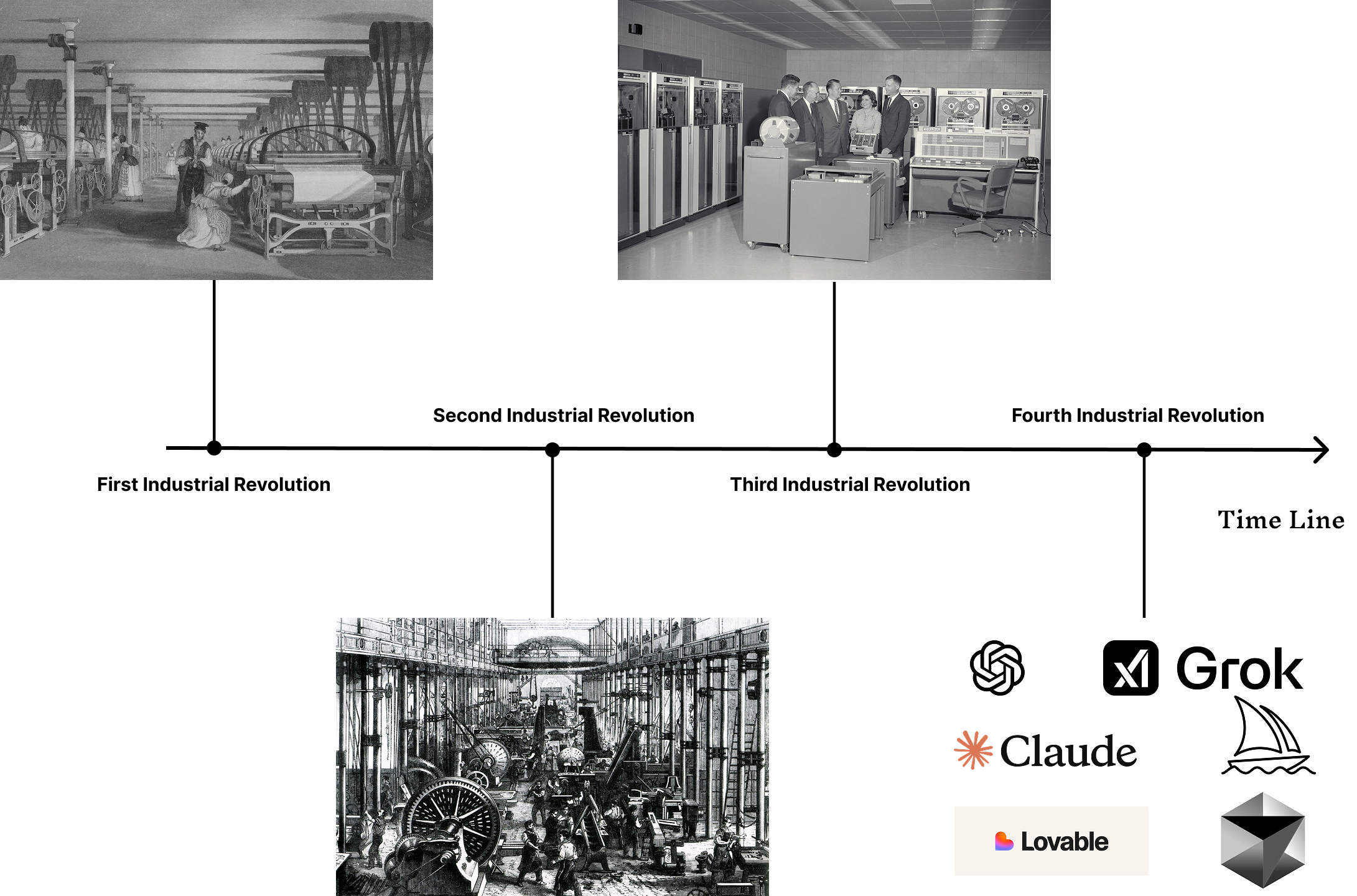
Humanity has gone through several industrial revolutions, each transforming productivity. To me, AI is the Fourth — and this one-week Vibe Coding sprint is my way of proving it.
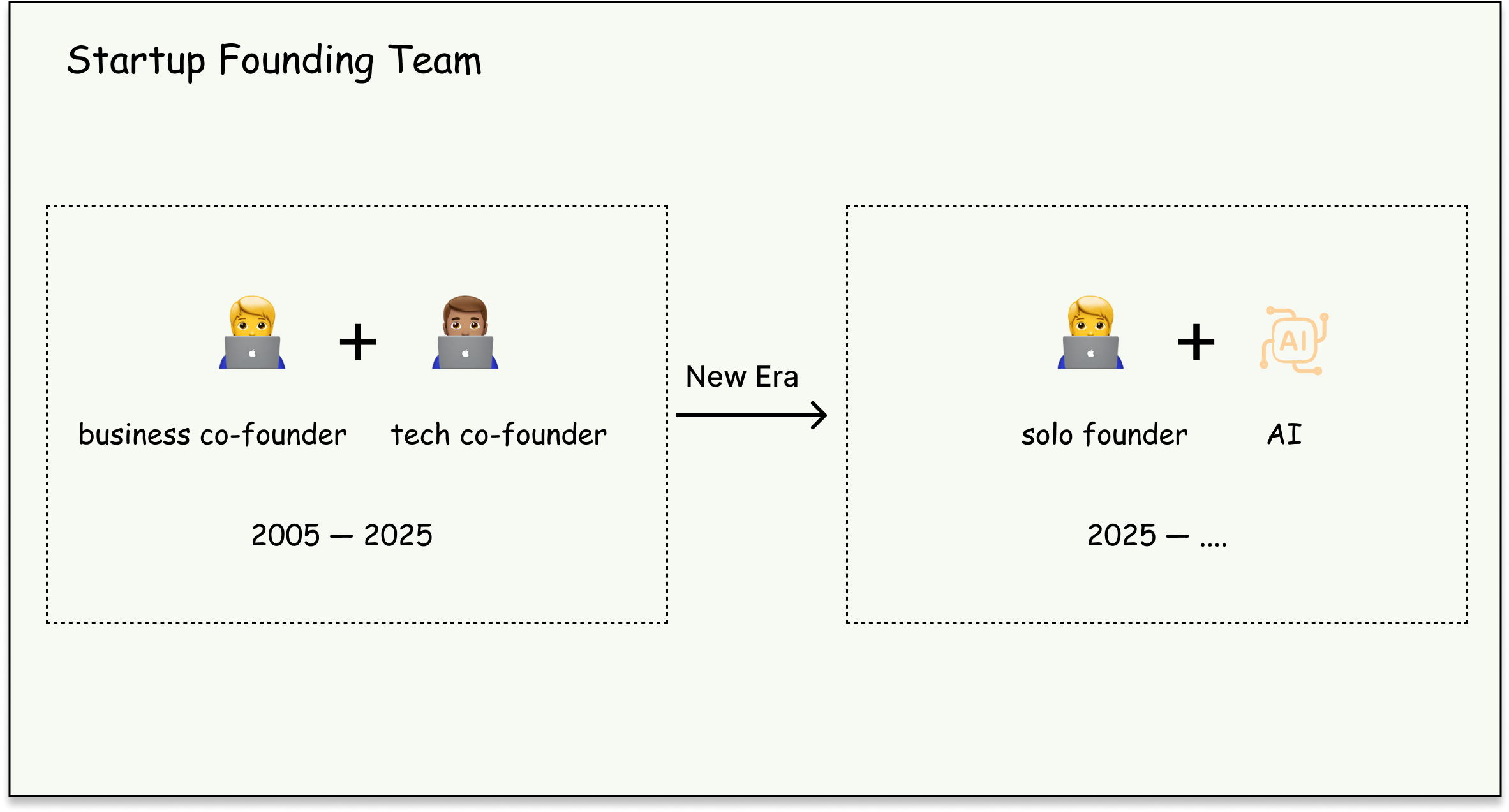
Since 2005, Y Combinator has changed and led a new trend — investing in young tech founders. Over the past two decades, the “co-founder” model has gradually become the default in startups, and having a technical co-founder is now almost considered a must.
But now, AI has changed everything. We are entering a new era. Tools like ChatGPT, Grok, and others have already become part of many people’s daily routines, fundamentally shifting behaviors and workflows. These tools dramatically boost productivity, and many small to mid-sized companies — especially startups — no longer need to rely heavily on traditional human engineers. Instead, they are increasingly replacing those roles with AI.
I believe this will have a profound impact on the startup world. We are moving from the traditional co-founder model (business co-founder + technical co-founder) to a new model: solo founder + AI. In this model, AI helps the solo founder handle everything from early-stage ideas to building the MVP.
That’s why I’m starting this “One Week Vibe Coding a Side Project” experiment. Over the next 7 days, I’ll use Lovable to turn my idea into an MVP — proving that the solo founder + AI approach will become mainstream in the next decade.
Why Onchain Builder Network
Four years ago, my first startup was an online tutoring platform — essentially a network where tutors and students could register, find each other, and match based on their needs. Back then, I had no idea that four years later I would once again be building a network — this time, Onchain Builder Network.
But in reality, I’ve been quietly working on “connecting people” this whole time — whether by attending events, hosting my own, or simply having coffee chats. Over these four years, I’ve come to deeply understand the importance of networks.
Humans are inherently social, cooperative beings. Interaction and collaboration are written into our DNA — they are a fundamental rule of nature. If we were merely isolated individuals with no connections between us, the world as we know it would not exist. It is only through communication and collaboration — from the smallest tribe or local community to a nation, to the entire planet (even now as a “global village”) — that humanity can unlock its full potential and create value far beyond what any single person can achieve.
In the past two years, I’ve hosted numerous offline events in different Canadian cities — Vancouver, Calgary, Ottawa, and more (you can find them on my personal website). These events generally fell into two categories:
Startup networking events — connecting founders and VCs.
Onchain events — bringing more people onchain and supporting onchain builders in Canada.
Through these experiences, I’ve once again realized how important networks are — how finding and connecting with founders, VCs, and onchain builders is a universal need.
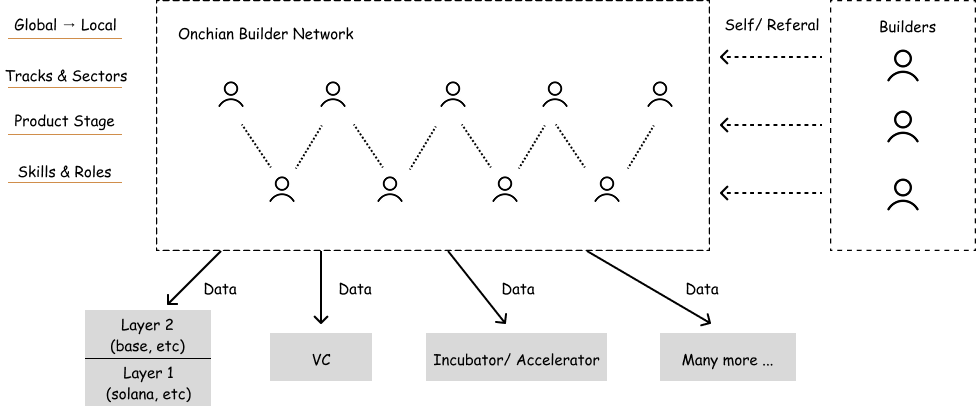
In organizing events and working on onchain projects, I’ve noticed that many Layer 1s, Layer 2s, and infrastructure projects need to attract more builders into their ecosystems. For example, I organized Canada’s first Base community meetup—supported by Base—and saw that builders want much deeper ecosystem support and engagement.
At the same time, as a VC, I constantly face the challenge of sourcing promising early-stage builders. In running hackathons and incubators, I’ve seen firsthand that finding, conducting due diligence on, and successfully inviting great builders is one of the biggest challenges for any VC or investor.
This is why I believe Onchain Builder Network is worth building — a dedicated space for connecting onchain founders, builders, investors, and ecosystems, helping them find each other faster and collaborate more effectively.
Plan
Team: Me + AI 😎
Step 1 Define Needs
Deliverables: one-liner, target users, core pains, key use cases.
Step 2 Design Features & Workflow
Deliverables: feature priorities, page map, core workflows.
Step 3 Prompt Development
Goal: use small, focused prompts to automate the “busywork” .
Step 4 Testing
Deliverables: test checklist, trial feedback, production URL.
Seven days. One small, real product. Let’s ship and see what one focused week can do. I’ll share the demo and lessons in Part 2 next week.
P.S. I designed all the illustrations myself—my first time doing the entire design in Figma. It took about four hours, and it was totally worth it. Shout out to myself !!