

Decisions about remediation, redevelopment, and industrial transition are rarely made in a vacuum.
Yet they are often made with fragmented information and short-term context.

Across resource extraction, industrial development, and environmental remediation, the underlying problem is not a lack of concern or action. It is the absence of durable, shared knowledge infrastructure. Data is scattered across jurisdictions, corporate archives, regulatory filings, local records, and personal memory. Much of it is incomplete. Much of it is quietly lost over time.
Each generation ends up rediscovering the same sites, the same constraints, and the same unresolved questions—without access to the reasoning, trade-offs, and conditions that shaped earlier decisions.
This is not a failure of intent.
It is a failure of memory.
Observation Before Intervention
The Global Resource & Industrial Observatory (GRIO) was conceived in response to this gap.
GRIO is not an action organization.
It is not an advocacy group.
It is not a consulting firm.
It is an observatory.
An observatory exists to document, contextualize, and preserve information across time. Its value is not in speed, influence, or authority—but in continuity. GRIO applies that logic to industrial systems and resource-related knowledge, where decisions often outlast the institutions that made them.
In fields shaped by long time horizons—mining, energy, manufacturing, remediation—the consequences of past choices can persist for decades or longer. Yet the documentation that explains those choices rarely survives intact.
GRIO begins from a simple premise: before acting, systems must be understood. And understanding requires memory.
The Problem Is Not Urgency, but Discontinuity
Most modern institutions operate on short cycles:
Political cycles span years.
Corporate strategies shift with markets.
Projects are funded, completed, and archived.
Industrial and environmental systems do not follow these timelines.
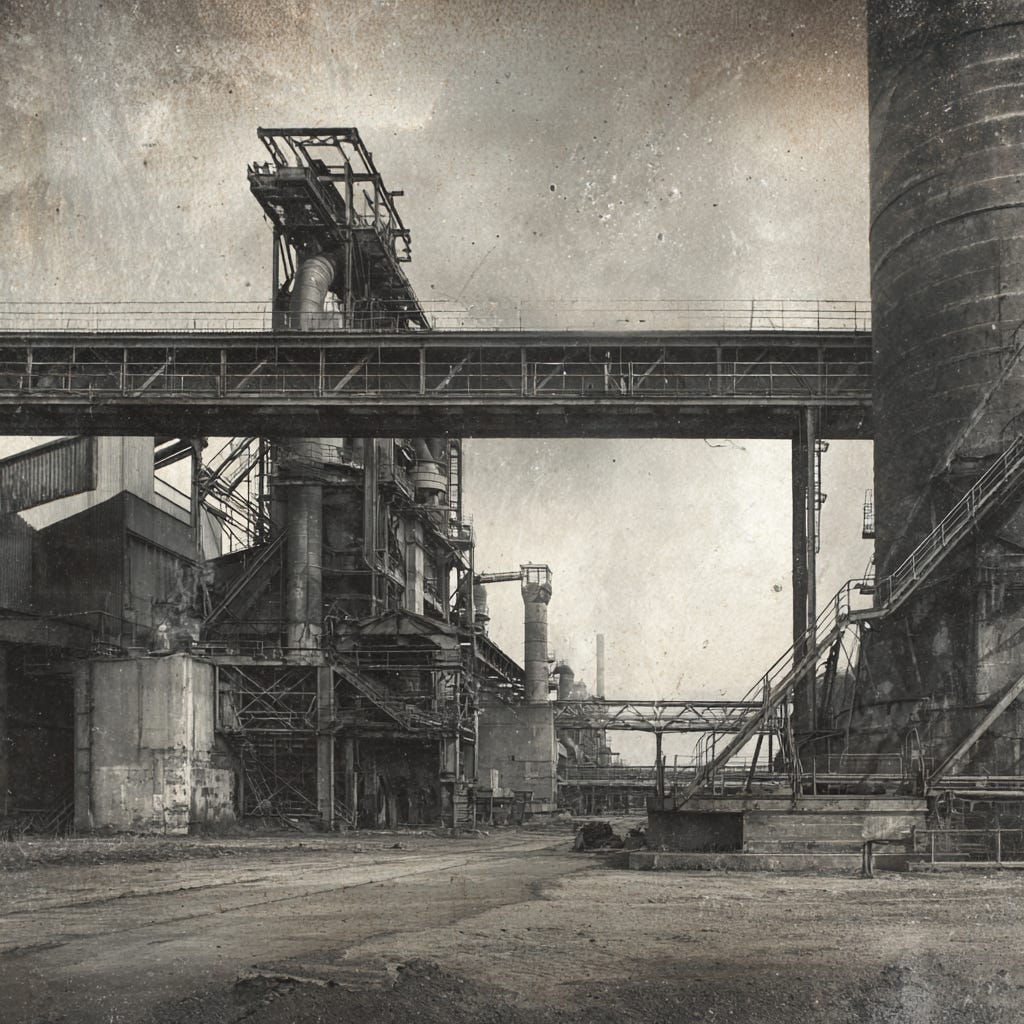
A site developed in the mid-20th century may only become a remediation priority generations later. Regulatory frameworks change. Companies dissolve. Agencies reorganize. The original context—why something was built, what constraints existed, what alternatives were considered—is gradually erased.
This creates a structural discontinuity:
Knowledge is fragmented across time.
Responsibility shifts across institutions.
Decisions are made without access to prior reasoning.
GRIO exists to reduce that loss—not by intervening, but by remembering.
A Public Knowledge Infrastructure
GRIO is not a single project or platform. It is a framework for long-term public documentation.
Current initiatives under GRIO include:
A national mapping of mineral and energy assets
An observatory focused on industrial legacy and circular recovery
These are not products. They are components of a broader public knowledge infrastructure—designed to be maintained, expanded, and inherited over time.
The goal is not to centralize authority, but to stabilize context. To ensure that future researchers, policymakers, planners, and communities are not forced to reconstruct the same information repeatedly from scratch.
This work is intentionally quiet. It favors accuracy over immediacy, documentation over narrative, and persistence over visibility.
What GRIO Does Not Do
Clear boundaries are essential for institutional trust.
GRIO does not approve projects.
It does not advocate for specific outcomes.
It does not assign blame or authority.
It does not replace regulatory or planning processes.
Its role is narrower—and more durable.
GRIO exists so that decisions, wherever they are made, can be informed by deeper historical and systemic context.
Why a Nonprofit
Some systems are not suited to venture timelines or market incentives.
The time horizon of industrial memory extends beyond typical funding cycles. The value of preserved context compounds slowly. Public trust matters more than growth metrics.
GRIO was established as a nonprofit for a simple reason: some institutions should compound knowledge, not revenue.
This structure allows the observatory to prioritize long-term stewardship over short-term optimization, and public value over proprietary advantage.
An Invitation, Not a Call to Action
GRIO is not built on the assumption that a single organization can hold all relevant knowledge. Quite the opposite.
Much of what matters already exists—in archives, in records, and in the experience of people who worked within these systems. What is often missing is a place for that knowledge to be held, preserved, and made legible across time.
If you have worked in resource development, industrial operations, remediation, planning, or policy, your knowledge likely matters more than you think.
GRIO is designed to hold that knowledge quietly and carefully.
This is not a sprint.
It is a structure meant to last.