

The Industrial Legacy & Circular Recovery Observatory
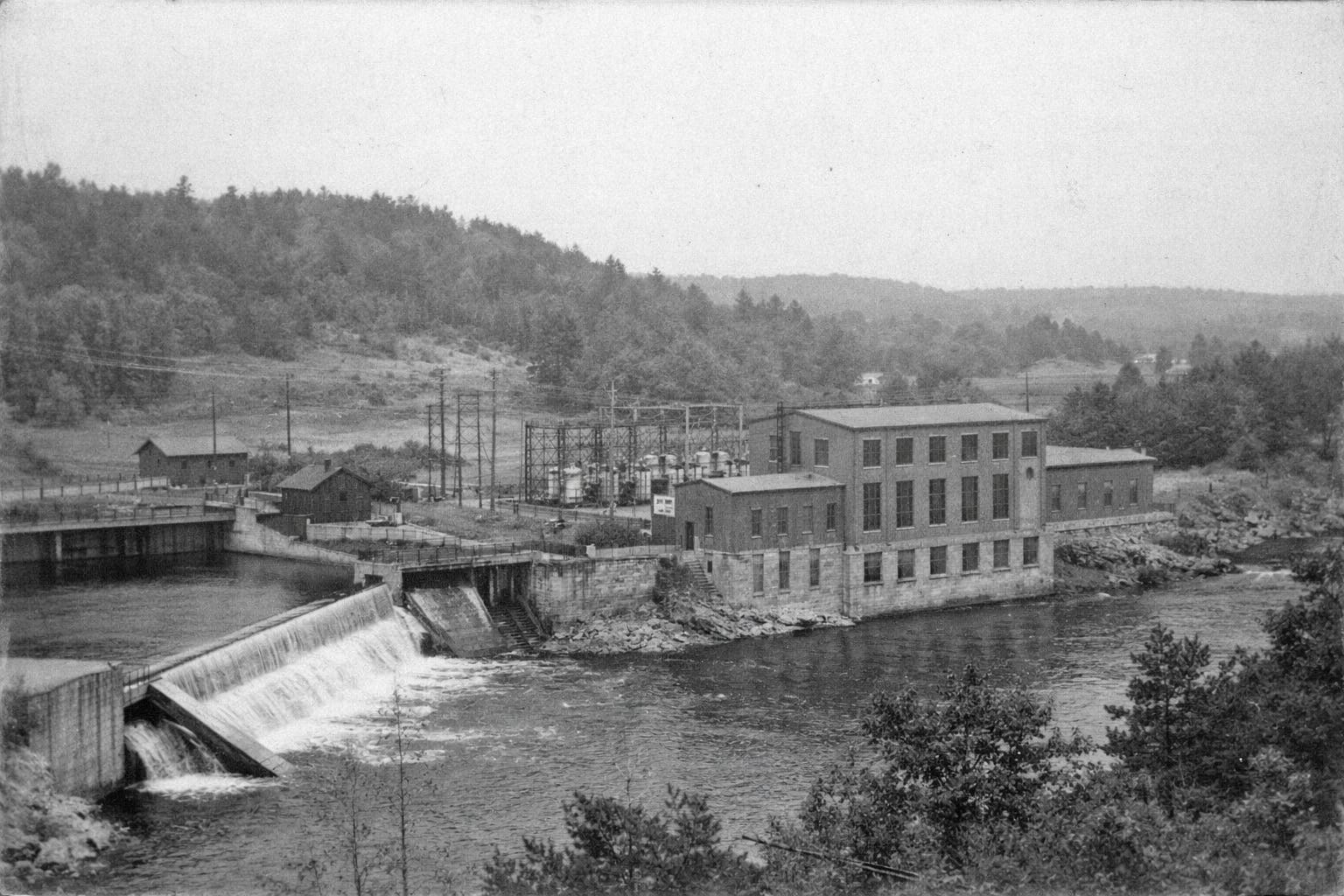
Canada’s industrial history did not end when facilities shut down or companies disappeared.
It continues to shape land, water, industrial structure, and communities today—yet much of this history no longer exists as a coherent, publicly accessible body of knowledge.
Across the country, mines, smelters, refineries, processing plants, and other industrial sites have been built, expanded, transferred, closed, dismantled, and repurposed. Company names changed. Ownership structures shifted. Regulatory frameworks evolved. In the process, information was fragmented across institutions, time periods, and formats, gradually losing continuity.
In many cases, what disappears is not the industrial activity itself—but our ability to understand it as an ongoing structure.
When Industrial History Loses Its System
Industrial activity does not truly end at decommissioning. Even when physical infrastructure is removed, industrial legacy often persists—embedded in geology, water systems, land-use constraints, environmental monitoring requirements, or redevelopment conditions.
Yet this history is rarely held within a unified, durable knowledge system. Relevant information is scattered across federal and provincial records, historical archives, environmental assessments, technical reports, corporate disclosures, and local context. No long-lived public infrastructure exists to assemble, compare, and maintain this information over time.
This absence is not merely a lack of data. It is a gap in public knowledge infrastructure.
When industrial history cannot be traced systematically, long-term research, cross-regional comparison, and intergenerational decision-making become structurally constrained.
The issue is not only what happened—but whether we still retain the capacity to understand it.
Industrial Legacy Is Not a Historical Category
Industrial legacy is often treated as a heritage or archival concern. In practice, it is ongoing.
Former industrial sites continue to intersect with land-use planning, environmental governance, remediation strategies, redevelopment pathways, and community-level conditions. Decisions made decades ago still shape present constraints, risks, and opportunities.
This work is not about assigning responsibility or reopening historical disputes. It is about restoring continuity of knowledge.
Without a stable documentation framework, industrial sites are addressed as isolated cases. Patterns remain invisible. Lessons are not carried forward. Long-term costs—environmental, regulatory, and institutional—compound quietly.
Why an Observatory
The Industrial Legacy & Circular Recovery Observatory is designed as a long-term public knowledge infrastructure.
An observatory does not advocate, regulate, or intervene. Its function is to observe, document, and preserve context over time—making information durable, referable, and intelligible across institutional and generational boundaries.
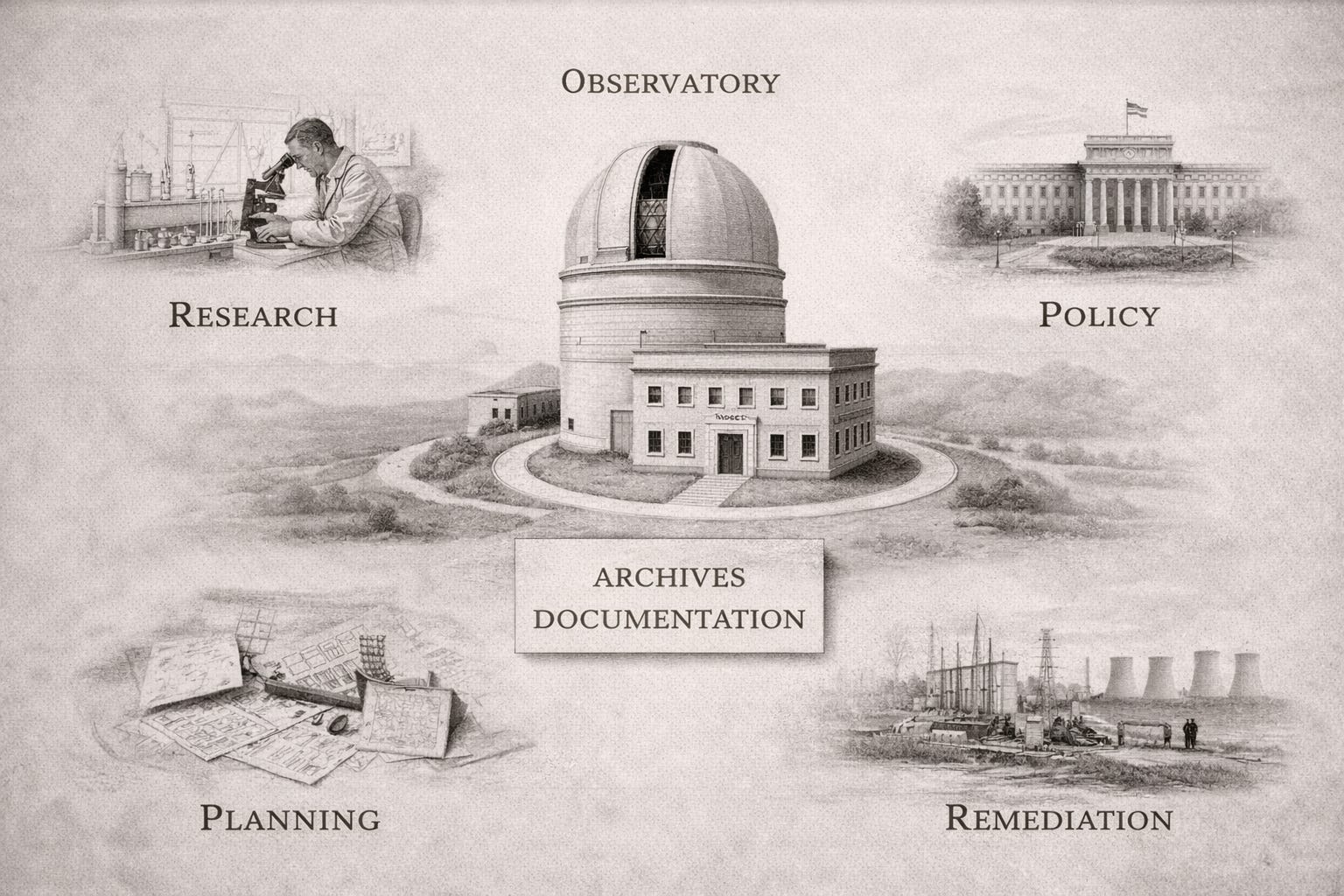
Much like meteorological or astronomical observatories, its value does not lie in immediate conclusions, but in continuity. It provides a stable foundation upon which research institutions, government bodies, environmental professionals, and policy actors can operate—without prescribing outcomes or positions.
Professional Data Work and Long-Term Maintenance
The data work behind an observatory is, by nature, a long-term professional undertaking.
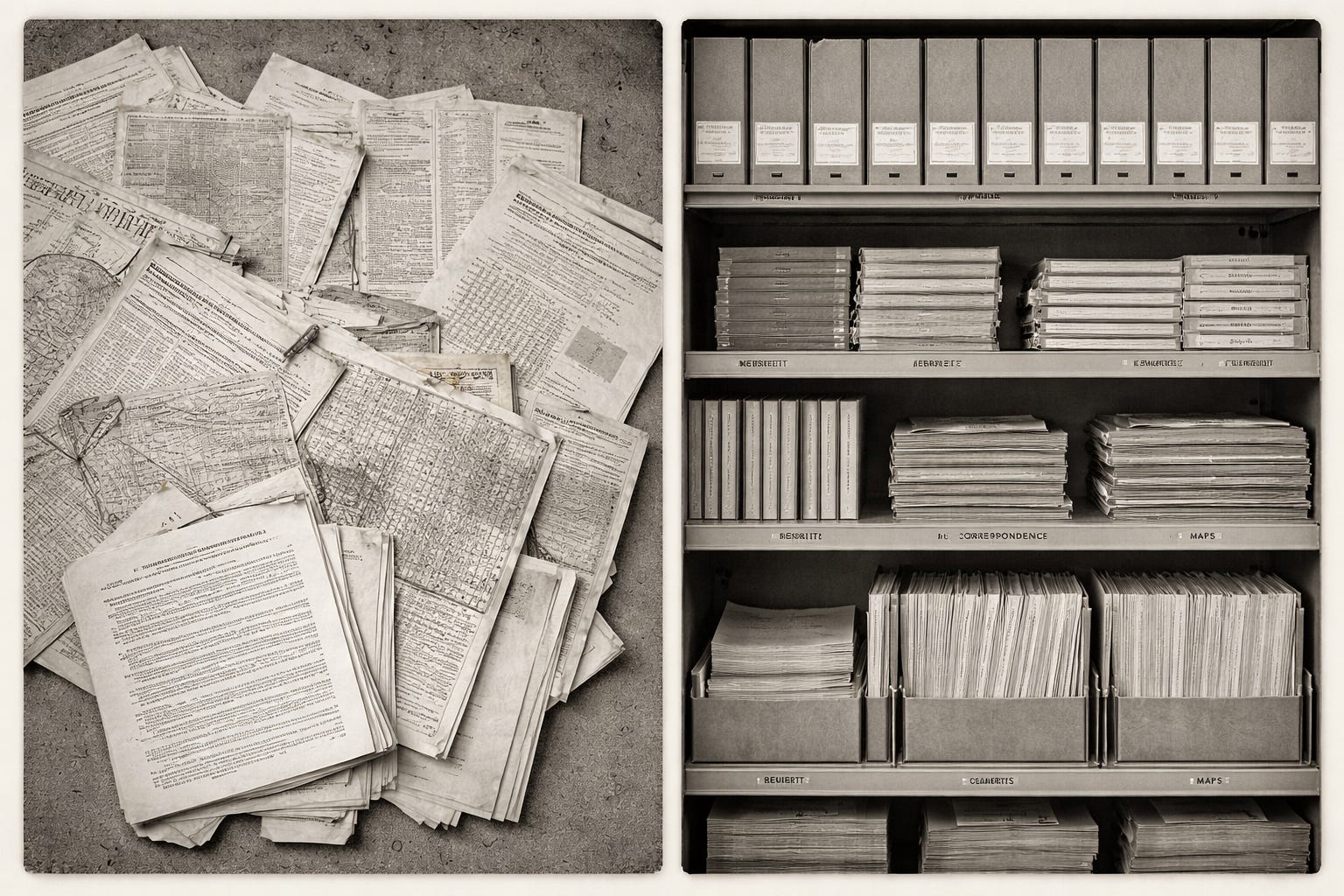
Information may originate from regulatory filings, archival sources, environmental and technical reports, legacy corporate documentation, and verified contextual input. Each source requires careful curation: attribution, boundary-setting, and ongoing revision where new information emerges.
This approach emphasizes methodological consistency, extensible classification, and realistic assumptions about maintenance over time. Data is not “completed”—it is accumulated, corrected, and sustained.
This is what allows the Observatory to function as a mature non-profit public initiative, rather than a time-bound campaign or a one-off dataset.
Part of a Larger Public System
The Industrial Legacy & Circular Recovery Observatory is one project within a broader non-profit framework.
That framework approaches public affairs through infrastructure-building rather than single-point intervention. It prioritizes systems that can evolve, persist, and be maintained across technological cycles and generations.
This perspective enables engagement with complex, long-horizon challenges—where continuity matters more than speed, and structure matters more than visibility.
From this standpoint, the significance of the Observatory lies not in how much it covers today, but in whether it can remain reliable ten or twenty years from now.
Closing
Industrial records decay naturally over time. Files are archived, formats become obsolete, institutions reorganize, and firsthand knowledge fades. Waiting for completeness often means losing context.
Visibility precedes decision-making.
Documentation precedes action.
Observatories do not create reality.
They ensure that reality is not forgotten.
Seeing what still exists is the starting point for any responsible, long-term approach to circular recovery and industrial legacy.